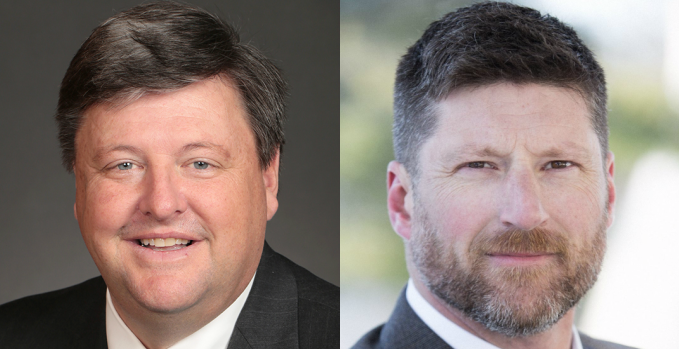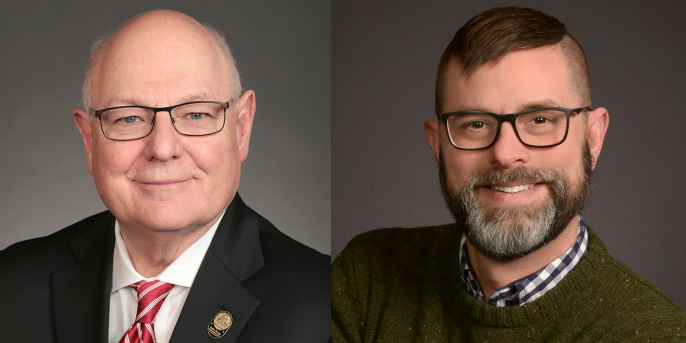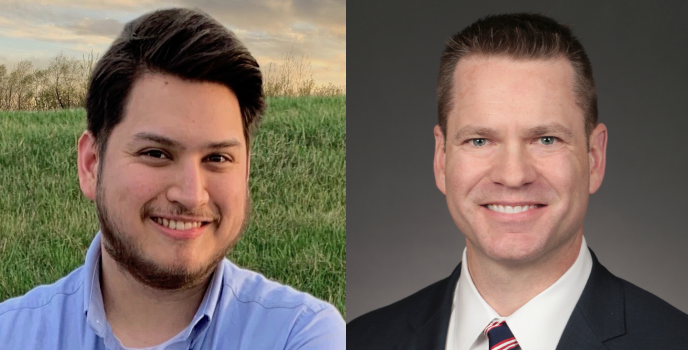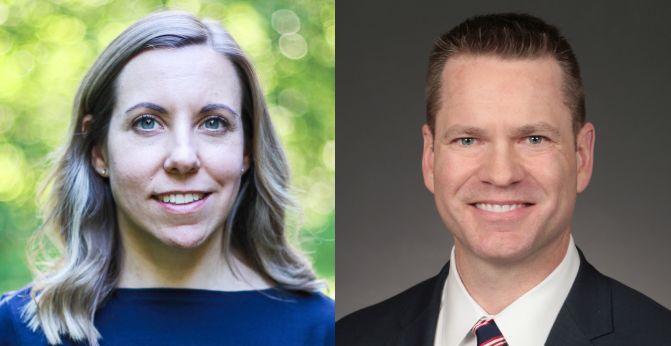
A second Democrat announced her candidacy this week in an Iowa Senate district that will be a top target next year.
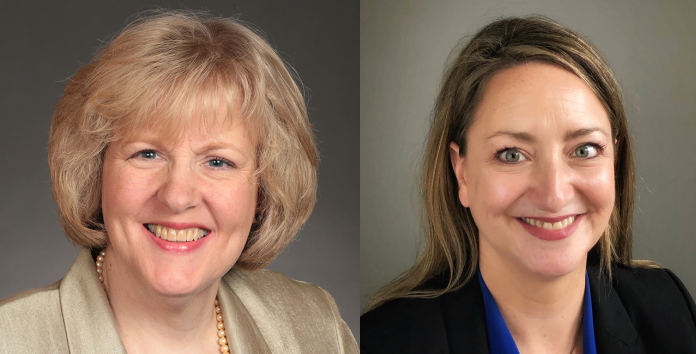
Sarah Trone Garriott challenging Charles Schneider in Iowa Senate district 22
- Sunday, Jun 30 2019
- Laura Belin
- 0 Comments
A second Democrat announced her candidacy this week in an Iowa Senate district that will be a top target next year.
Ross Wilburn will be the Democratic candidate in the August 6 election to represent Iowa House district 46. Delegates to a special nominating convention in Ames on June 29 chose Wilburn on the second ballot.
The former Iowa City mayor, who has worked for Iowa State University Extension and Outreach since 2014, recently told Bleeding Heartland that if elected to the state House, he wants to address problems with privatized Medicaid, climate change, and gun violence. Other priorities for Wilburn are strengthening public school districts, restoring collective bargaining rights for public workers, and making Iowa more welcoming and inclusive for marginalized groups such as the LGBTQ community, people of color, veterans, and people with disabilities.
For the second time this year, voters in a college town will elect a new Iowa lawmaker when most students are not on campus. Governor Kim Reynolds announced today that the special election in House district 46, covering part of Ames, will take place on Tuesday, August 6.
The College and Young Democrats of Iowa quickly denounced the decision: “Anyone else having some déjà vu with the timing of this special election? @KimReynoldsIA is once again denying students – many who will not be on campus until late Aug. – the chance to vote in the IA House district they heavily occupy.”
Whereas Reynolds clearly tried to suppress student and faculty voting by scheduling the Senate district 30 special election during the University of Northern Iowa’s spring break, the timing of the coming vote in Ames is arguably consistent with standard Iowa practice.
However, the governor could have and should have set the date a few weeks later, allowing greater participation by Iowa State University stakeholders.
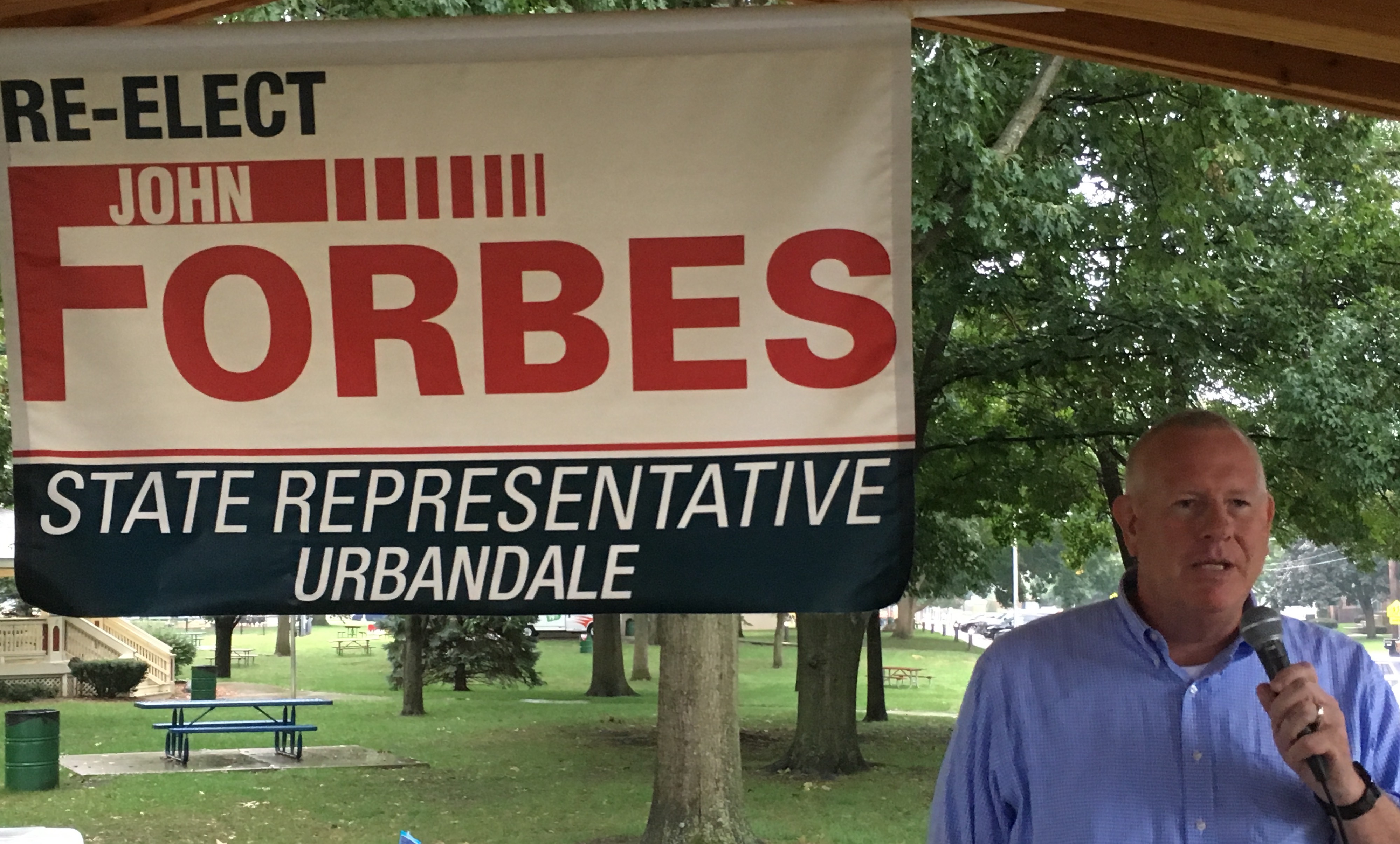
Republican State Senator Charles Schneider coasted to re-election in 2016. He defeated his Senate district 22 challenger Andrew Barnes by more than 4,000 votes after spending only a token amount on the race. In fact, Schneider gave most of his own campaign funds ($133,000) to the Iowa GOP for use in more competitive state Senate districts.
Schneider drew his first declared challenger for this cycle on June 11, when Tricia Gavin announced her candidacy. At least one other Democrat is seriously considering this race, so Schneider’s general election opponent will not be known until after the June 2020 primary.
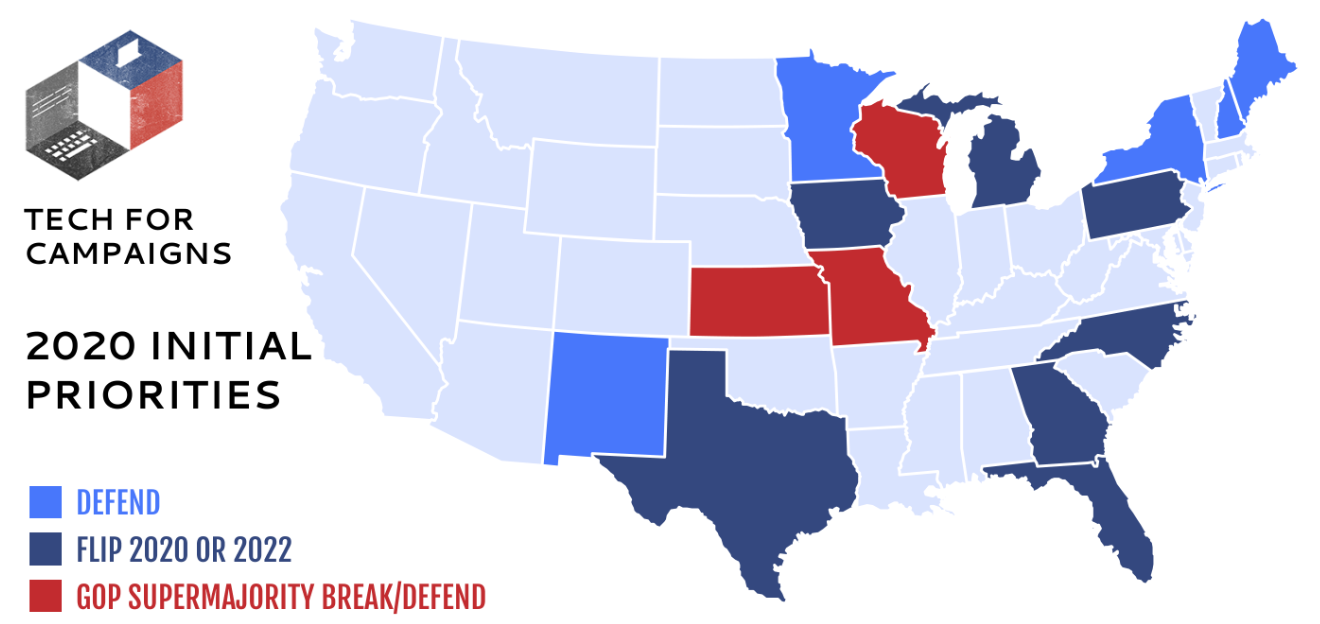
Given recent political trends in the western suburbs of Des Moines, it’s already obvious that Senate district 22 will be a top Democratic target next year.
State Representative Lisa Heddens will resign from the Iowa House in the middle of her ninth term after being appointed to the Story County Board of Supervisors on June 13. The Ames Democrat and ranking House member of the Health and Human Resources budget subcommittee was one of five people vying to replace Republican Rick Sanders. He stepped down last month to serve as president of Iowa State University’s Research Park.
Heddens’ appointment creates the first all=female board of supervisors in Iowa history. Her colleagues governing Story County will be fellow Democrats Lauris Olson and Linda Murken, who outpolled GOP incumbent Martin Chitty in November 2018.
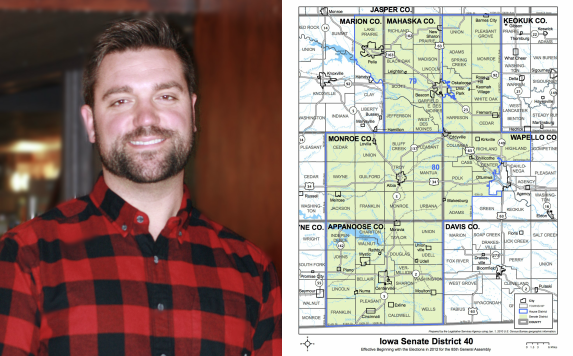
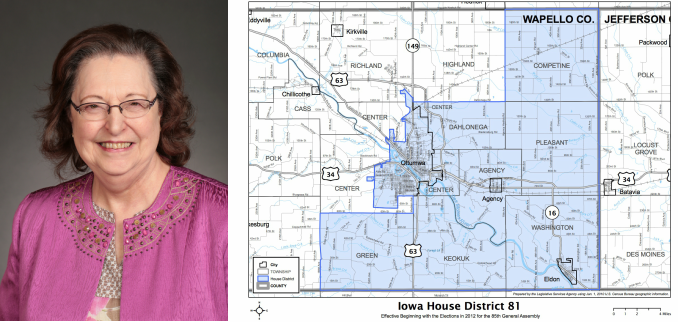
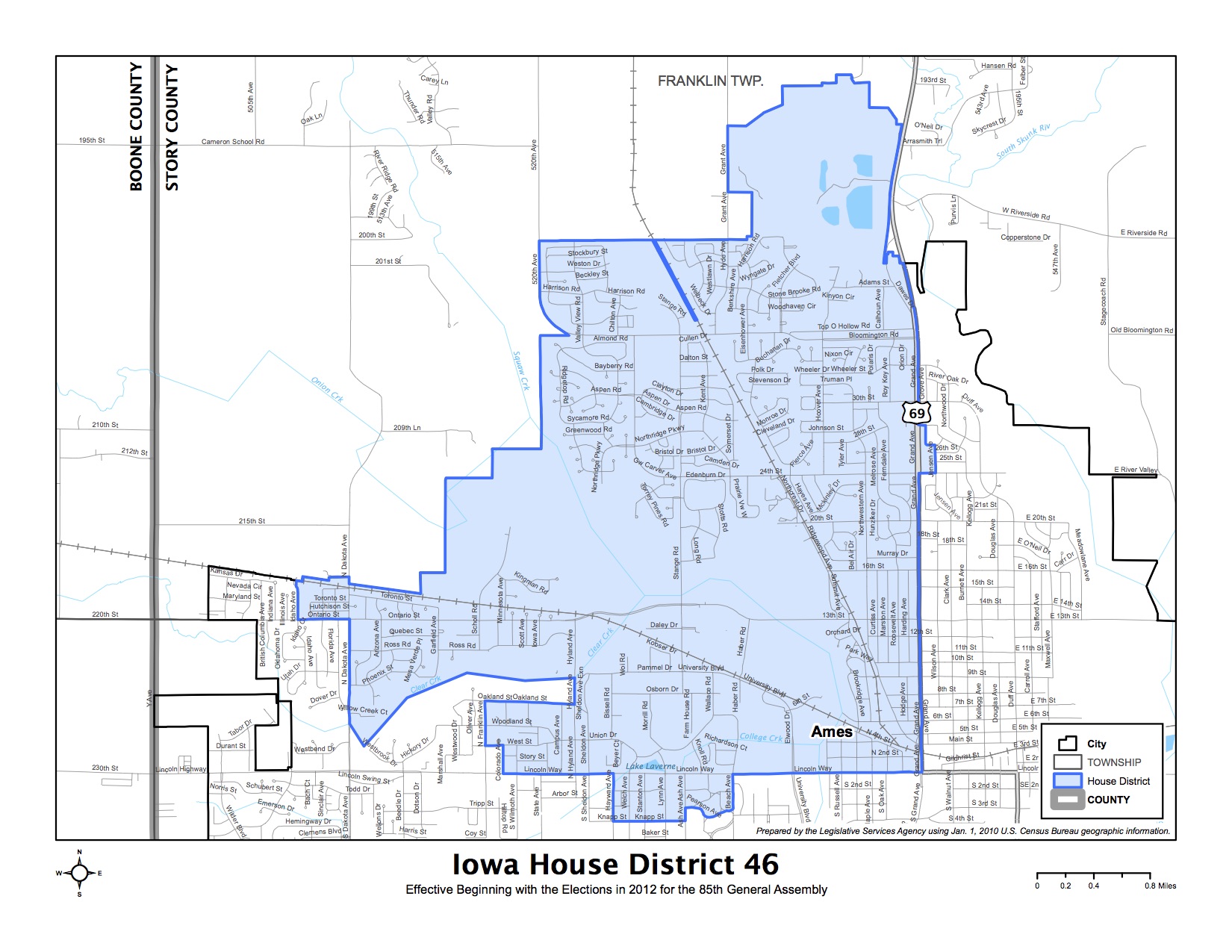
Governor Kim Reynolds will soon set a special election for Iowa House district 46, covering part of Ames (see map at the top of this post).
Democratic State Senator Claire Celsi has extensive experience in the public relations field. -promoted by Laura Belin
As ranking member of the Iowa Senate’s Administration and Regulation Appropriations Subcommittee, I was supposed to be privy to budget requests from state agencies, including the governor’s office. Unfortunately, Governor Kim Reynolds refused our committee’s request to appear in person to explain why they were requesting a 10 percent increase in their budget while requesting a “status quo” budget from all other state departments.
Since our committee’s process was prematurely cut short by Committee Chair Representative John Landon, I attempted to go through staff back channels to find out what the $200,000 increase would be used for. I was told that Reynolds had requested the hiring of two analysts, one for tax policy and one for healthcare policy. I thought those were perfectly reasonable requests, since both areas have been so completely botched by Republicans in the past three years. But I still wondered why no one would come to our committee meeting to explain the request.
Now we have the answer. Turns out, the governor is planning to hire a “public relations manager.” I have some advice for the new staff member, based on my years of experience in public relations, brand management and communications. Some of my former clients were state agencies, so I know the demands they will be facing.
Governor Kim Reynolds asked for and received a nearly 10 percent budget increase for her office operations during the fiscal year beginning on July 1, with a view to hiring two additional full-time employees. Republican lawmakers told members of the Iowa House and Senate the extra funding was for analysts to focus on health policy and tax policy.
This week the governor’s office posted a new job listing on a state government website. Instead of seeking a health or tax policy analyst, the governor is hiring a full-time “public relations manager” to coordinate messaging about her initiatives.
Bruce Lear floats ideas on how to start repairing the damage from Iowa’s 2017 collective bargaining law, a “devastating step back in time” for public sector employees. -promoted by Laura Belin
It was a time of bell bottoms, shiny shirts, and men with shoulder-length hair. Disco was born, and Vietnam escalated. Nixon visited China; Americans loved the tv shows All in the Family, M*A*S*H, and Sanford and Son. It was America prior to 1974.
Governor Kim Reynolds made headlines last week with two vetoes: blocking language targeting the attorney general, and rejecting a medical cannabis bill that had strong bipartisan support in both chambers.
A provision she didn’t veto drew little attention. For the foreseeable future, it will prevent Iowa courts from using a tool designed to make the criminal justice system more fair to defendants of all races and income levels.
Reynolds should appreciate the value of the Public Safety Assessment (PSA), since she works closely with two former State Public Defenders: Lieutenant Governor Adam Gregg and the governor’s senior legal counsel Sam Langholz. But last year she ordered a premature end to a pilot program introducing the tool in four counties. The governor’s staff did not reply to repeated inquiries about the reasoning behind Reynolds’ stance on this policy.
Notably, the owner of Iowa’s largest bail bonding company substantially increased his giving to GOP candidates during the last election cycle, donating $10,100 to the governor’s campaign and $28,050 to Republicans serving in the state legislature.
Continue Reading...A new state law denying sex education funding to Planned Parenthood will likely be found unconstitutional, a Polk County District Court has determined.
Judge Joseph Seidlin issued a temporary injunction to block new statutory restrictions on Planned Parenthood of the Heartland’s access to government sex education grants. His order, enclosed in full below, found Planned Parenthood would suffer “irreparable harm” if the law took effect. State agencies are due to announce fiscal year 2020 recipients for the Community Adolescent Pregnancy Prevention and Services Program (CAPP) and the Personal Responsibility Education Program (PREP) on May 31.
In addition, the court’s order stated Planned Parenthood was “likely to succeed on the merits of its equal protection claim” under the Iowa Constitution, since the law contains an exemption for a “nonprofit health care delivery system” that provides abortions in some locations.
One Iowa Action: “We should not be encouraging half-measures and disparate treatment of our fellow Iowans.” -promoted by Laura Belin
Des Moines Register Opinion Editor Kathie Obradovich’s recent column sets out a laudable goal; protecting both religious liberty and the LGBTQ community (What if Iowa could protect both religious freedom and LGBTQ rights?).
Unfortunately, the substance of the piece misses the mark by pulling from erroneous source material that equates Utah and Iowa, two states with very different legal and political landscapes. In doing so Obradovich implies, perhaps unintentionally, that LGBTQ Iowans need to start from a place of compromise when their rights and freedoms are threatened.
Nick Miller announced his candidacy in Iowa House district 19 at a May 23 event in his home town of Polk City. The fifth-generation Iowan, who is also a small business owner and Drake University student, would face House Majority Leader Chris Hagenow in the general election if he becomes the Democratic nominee. Miller said his campaign will be grounded in the principles of “Investing, Educating, and Sustaining.”
I want to represent all working families and Iowans; I want to represent a new generation of Iowans; and, I want be a voice for the voiceless and will stand up and fight for what is right.
Although I didn’t include this district in my overview of potentially competitive state House races, I’ll be watching this campaign for a couple of reasons.
What a difference a few years makes.
Democrats did not field a candidate against State Senator Brad Zaun in 2008 or 2012. The party provided no financial assistance to Senate district 20 nominee Miyoko Hikiji in 2016. That year, the Senate Majority Fund spent almost nothing on offense, as six-figure sums went toward trying to save Democratic-held seats around the state. Zaun won a fourth term by more than a 7,000 vote margin.
With central Iowa’s suburban voters trending toward Democrats, Zaun has emerged as one of the most vulnerable Senate Republicans for the 2020 cycle. As of May 15, he has a top-tier challenger: Johnston City Council member Rhonda Martin.
Heather Marie Dunn is a transgender Iowan and “recovering right-winger” in Polk County. -promoted by Laura Belin
“She lied to me,” were my first thoughts when I heard Governor Kim Reynolds had signed the health and human services budget that included a mean-spirited exclusion of transgender and intersex health care from Iowa’s Medicaid system.
Republicans used their control over state government to inflict tremendous damage on Iowa during the 2019 legislative session: underfunding education, blocking steps that would improve Medicaid services, dismantling effective sex education programs, further undermining workers’ rights, targeting health care for transgender Iowans, and giving Governor Kim Reynolds the ability to pack our highest courts with conservative ideologues.
The disastrous outcomes underscored the urgent need for Democrats to break the Republican trifecta in 2020. The Iowa House is the only realistic path for doing so, since Reynolds won’t be up for re-election next year, and the 32-18 GOP majority in the Iowa Senate will take several cycles to undo. State Representative Andy McKean’s recent party switch improved Democratic prospects, shrinking the Republican majority in the chamber from 54-46 to 53-47. Nevertheless, a net gain of four House seats will be no easy task for Democrats.
The Daily Kos Elections team calculated the 2018 election results for governor and state auditor in every Iowa House district. Jeff Singer discussed their key findings in a May 2 post: Reynolds carried 60 state House districts, Democratic nominee Fred Hubbell just 39. The “median seat backed Reynolds 51.0-46.3, a margin of 4.7 points. That’s about 2 points to the right of her statewide margin of 2.8 points.” Eight Democrats represent districts Reynolds carried, and one (Dave Williams) represents a district where Reynolds and Hubbell tied, while “only one Republican is in a Hubbell district.”
I’d encourage all Iowa politics watchers to bookmark the DK Elections number-crunching, as well as the team’s spreadsheet on 2016 presidential results by House district.
The Daily Kos team also looked at the 2018 voting for state auditor, seeking clues on which House seats might be within reach for Democrats. I don’t find that angle as useful. Previous State Auditor Mary Mosiman ran a terrible campaign. Not only did Rob Sand outwork Mosiman on the trail, he ran unanswered television commercials for six weeks, allowing him to go into election day with higher name ID than the incumbent, which is almost unheard of. Sad to say, Democrats won’t be outspending incompetent, little-known GOP candidates in the 2020 state legislative races.
Here’s my first take on both parties’ best pickup opportunities. What appear to be competitive state House seats may shift over the coming year, depending on candidate recruitment and incumbent retirements, so Bleeding Heartland will periodically return to this topic.
A group that popped up this year to support MidAmerican Energy’s solar bill spent $1.25 million on television commercials alone, as well as at least $11,000 on Facebook advertising and an undisclosed sum on direct mail.
The REAL Coalition conceals its donors and board members but appears to be funded primarily by utility companies and the industry’s trade association.
On the first day of the Iowa legislature’s 2019 session, Secretary of State Paul Pate formally notified lawmakers that a “procedural oversight” by his office had wiped away progress toward adopting two constitutional amendments.
On the session’s final day, lawmakers took steps to ensure that neither Pate nor any future secretary of state can repeat the error.
UPDATE: The governor signed this bill on May 8.
In the closing hours of the legislature’s 2019 session, Iowa House Republicans introduced a new plan to change the system used to choose our state’s judges.
While not as far-reaching as the initial proposal, the legislation would still give Governor Kim Reynolds substantially more control over judicial selection.
State Representative Andy McKean has left the Republican caucus. His official page on the Iowa legislature’s website now lists “no party specified,” and the Iowa House Republicans website no longer lists him as a member. His legislative page also indicates that he has lost all House committee assignments, as of April 23. McKean had chaired the House Ethics Committee and served on the Environmental Protection, Judiciary, Local Government, and State Government committees.
Two months after a U.S. District Court struck down Iowa’s 2012 “ag gag” law, state lawmakers rushed to pass a new statute protecting agricultural facilities from damaging publicity.
Less than six weeks after Governor Kim Reynolds signed that law into effect, the same plaintiffs were back in federal court, arguing that the statute violates the First Amendment.
Carl Olsen has been a leading advocate for medical cannabis in Iowa for many years and closely follows legislative happenings related to the issue. -promoted by Laura Belin
In a highly unusual move, the Iowa Department of Public Health (IDPH) announced on the afternoon of April 12 that the Medical Cannabidiol Advisory Board had rescheduled its planned meeting. Instead of convening for two and a half hours on May 3, the board would meet for one hour on April 16.
Members called the shorter, rushed meeting in order to discuss recommendations on the tetrahydracannabinol or THC cap and purchase limits in a bill the Iowa House approved last month.
UPDATE: This bill did not advance, but Republicans put comparable language into the “standings” budget bill, Senate File 638 (see Division IX on pages 16 and 17). Governor Kim Reynolds can and should item veto this section.
Energy-efficiency programs that benefit low-income Iowans would be cut under a bill Republicans advanced today from an Iowa Senate subcommittee.
Senate Study Bill 1256 would compound the harm done by Senate File 2311, which Republicans enacted in 2018 over objections from many stakeholders. Whereas last year’s bill reduced utility companies’ required spending on energy efficiency programs with a 25-year track record, the new bill would limit allowable spending on such programs.
Republican attacks on working Iowans have received less attention this year than in 2017, when new laws shredded public employee collective bargaining rights, blocked local governments from raising the minimum wage, and reduced workers’ compensation benefits, especially for those who hurt their shoulder on the job.
But below the radar, GOP lawmakers have moved several bills lately that would make life harder for working people, including some facing the difficult circumstances of unemployment or workplace injury.
Matt Chapman has been helping to organize neighbors since residents of his mobile home park recently received notice that rent will go up by some 69 percent in June. -promoted by Laura Belin
The evictions have started where I live at Midwest Country Estates in Waukee. The new owners, Havenpark Capital, have a business model devoid of any compassion or even a passing concern for the elderly and vulnerable in the mobile home park they purchased. They made a promise to the shareholders, and apparently there is no room for empathy when dividends are being maximized.
ISU economist Dave Swenson exposes how a Republican property tax bill relies on flawed assumptions and would make the “important job of governing harder” for cities and counties. -promoted by Laura Belin
It is a common canard among the anti-property taxers that city and county governments, those closest to the electorate, are gouging unsuspecting taxpayers. It is their rallying lament, and it requires no substantiation, just confident assertion.
As is frequently the case with made-up woes like this, Iowa House Republicans have a solution. The remedy is House Study Bill 165, a bill to place limits on city and county government property tax growth.
Longtime renewable energy advocate Mike Carberry weighs in on MidAmerican’s bad solar bill, which has cleared the Iowa Senate and is eligible for debate in the state House. -promoted by Laura Belin
MidAmerican Energy has become the public face of Iowa’s clean energy leadership, touting its “climate pledge” and “bold vision” for 100 percent renewable energy future. But the company’s legislative work in Des Moines raises serious questions about its loyalties to clean energy consumers.
Last year, MidAmerican actively worked to gut energy efficiency funding and programming that saved customers millions of dollars. Now the company is trying to stomp out the Iowa solar industry, which it apparently views as competition.
UPDATE: The Iowa House approved an amended version of Senate File 548 on a mostly party-line 52 to 44 vote. The Senate approved the bill by 33 votes to 17. Governor Kim Reynolds signed the bill on May 9.
Angelisa Belden is communications and development director for the Iowa Environmental Council. -promoted by Laura Belin
Iowans are dealing with the aftermath of receding flood waters this week. Heart-wrenching stories have emerged about returning to decimated homes, topsoil-choked streams headed for the Gulf of Mexico, and the sad task of removing lifeless bodies of young calves who couldn’t withstand the deluge.
Commentators and elected officials are missing the point – or at least failing to bring proper attention to – the obvious and science-based solution to not only water quantity but water quality crises facing our state. We must adopt policy and pass laws that slow down the water running off of our farm fields. That task starts with the federal Farm Bill but ends here at home with efforts to replace Iowa’s lax environmental rules with meaningful protections for land and water.
Senate File 548, the bill that would restrict the use of loans from the State Revolving Fund to purchase land for water quality projects, is a step in the wrong direction.
Iowa House Chief Clerk Carmine Boal will be away from the legislature for some time while undergoing treatment for a brain bleed, House Speaker Linda Upmeyer informed state lawmakers and legislative staff today.
Carl Olsen is a leading advocate for expanding access to medical cannabis in Iowa and maintains the Iowans for Medical Marijuana website. -promoted by Laura Belin
The Des Moines Register reported on March 29 that a member of the Iowa Medical Cannibidiol Advisory Board had resigned over comments made on the floor of the House during debate on House File 732. (Bleeding Heartland covered that bill’s passage here.)
“Is it perfect? No, it’s not perfect. Are we moving in the right direction? Absolutely,” Democratic State Representative Wes Breckenridge said shortly before Iowa House members approved a bill to improve our state’s medical cannabis program.
House File 732 would allow some Iowans to use more potent products and would make it easier for some patients to apply for a registration card. The House passed the bill by 96 votes to three after Breckenridge and Republican State Representative Jarad Klein praised each other’s consensus-seeking.
But for a suspenseful few minutes during the March 26 floor debate, the future of the bill was in doubt because of a first-term Republican’s far-reaching amendment.
Children supervised by a responsible adult would be able to hunt deer with a “pistol or revolver” under a bill the Iowa House approved on March 20, mostly along party lines.
House members rejected a Democratic effort to restore language that had gained bipartisan support in committee and would have required minors to complete a hunter education course before using such weapons for hunting.
Matt Chapman closely follows Iowa legislative happenings, including bills affecting Iowans on public assistance. -promoted by Laura Belin
Iowa Senate Republicans on March 19 approved new work requirements for tens of thousands of Iowans on Medicaid or receiving food assistance. Senate File 538 would instruct the Iowa Department of Human Services to request a federal waiver for the Iowa Health and Wellness Plan, our state’s version of Medicaid expansion. Approximately 170,000 adults receive Medicaid through that plan, and roughly 61,000 of them also receive Supplemental Assistance Nutrition Program (SNAP) benefits.
If the waiver were approved, Medicaid recipients would face new reporting obligations for “community engagement.” If not part of an exempted group, they could lose coverage due to paperwork errors, even if they were working the requisite number of hours per week. Nonpartisan analysis estimated this bill would cost the state budget nearly $5 million the first year after the waiver and nearly $12 million each subsequent year.
During floor debate (beginning at 11:53:20 of this video), Republicans characterized the bill as a way to hold Iowans accountable. Democrats offered two amendments that would have extended that accountability to large employers and the for-profit insurers known as managed-care organizations (MCOs), which oversee Iowa’s privatized Medicaid.
Matt Chapman has closely followed this year’s legislative proposals affecting Iowans on public assistance. He previously reported on a separate bill with a $40 million price tag. -promoted by Laura Belin
A Republican bill seeking to impose new work requirements on some 170,000 Medicaid recipients in Iowa would cost the state budget nearly $5 million more the first year and an additional $12 million every year thereafter, according to analysis by the nonpartisan Legislative Services Agency. Any savings to the state would be “minimal.”
Paul Deaton: “It’s easy to say we should balance our politics and policy. I’m not sure about that. A better approach is to recognize there is political bandwidth and tune in.” -promoted by Laura Belin
The 2020 general election will be challenging for a lot of reasons, not the least of which for me is deciding whether policy or politics is the most important part of it.
Politics is the art of what’s possible. I’m over the naive notion that policy matters more than politics, although the art of what’s possible has produced some problems.
Two bills on sports betting, House File 648 and Senate File 366, made it through the legislature’s first “funnel.” John Morrissey wonders, “What assurance do any of us have that the colleges and universities can police themselves in light of today’s revelations?” -promoted by Laura Belin
The Associated Press is reporting today that 50 people, including several television celebrities, have been charged in connection with a scheme to get their children accepted to college athletic teams after offering bribes to college coaches and other collegiate insiders.
While not directly on point, this is very concerning in light of the state legislature’s apparent desire to legalize sports betting in Iowa casinos, not to mention the extremely arrogant position taken by Prairie Meadows to construct a facility before the enabling legislation was even introduced.
Randy Richardson spotlights a terrible (and likely unconstitutional) bill whose sponsor has previously proposed other wacky ideas related to marriage and divorce. -promoted by Laura Belin
I volunteer for a group called Iowans for Public Education, following the legislature to see what bills impact education. As I went through bills introduced at the last minute in an effort to beat the first major legislative deadline, a non-education bill caught my eye.
A bill that would provide state “education savings grants” to families of some children attending private schools lacks the support to move forward in either the Iowa House or Senate, state Senate President Charles Schneider told constituents at a March 9 legislative forum.
Amanda Rex-Johnson reports on a lesser-known bill that made it through the Iowa legislature’s first “funnel.” -promoted by Laura Belin
Two types of people immerse themselves in politics: those who are motivated by personal achievement, and those who find motivation born in affliction, for whom adversity becomes a catalyst.
While I’ve always expressed my convictions, often in the political sphere, opinions alone don’t typically change the rules that govern society. It wasn’t until Iowa law affected my family that I was prodded into action.
Angelisa Belden is communications and development director for the Iowa Environmental Council. -promoted by Laura Belin
Iowans were up in arms this week in reaction to two bad bills aimed at restricting acquisition or expansion of public lands. House File 542, introduced by Republican State Representative David Seick, and Senate Study Bill 1221, introduced by GOP State Senator Ken Rozenboom, would severely limit the ability for state agencies, cities and counties, and private citizens to acquire or donate land for public projects.
In a state with just 2 percent of land in public holding, these bills were a drastic overreach to answer a problem that doesn’t exist.
The Iowa House Judiciary Committee unanimously voted on March 6 to advance a state constitutional amendment on automatic restoration of voting rights after an offender has completed a felony sentence. The action indicates one of Governor Kim Reynolds’ priorities for the 2019 legislative session should clear the lower chamber with little resistance.