
Randy Evans is executive director of the Iowa Freedom of Information Council, a nonpartisan, nonprofit organization that promotes openness and transparency in Iowa’s state and local governments. He can be reached at DMRevans2810@gmail.com. This essay first appeared on his Substack newsletter, Stray Thoughts.
Beyond the sadness and loss of life, there is something troubling about a car-pedestrian accident last September 25 in Urbandale that took the life of Jasmira Kadic, 60, and seriously injured her husband.
The tragedy is heartbreaking. It forever changed two families and deeply affected their circle of friends.
But what followed the accident also is disturbing because it raises a multitude of questions that government officials owe it to the public to answer.
Forty days passed following the accident before officials announced who had been driving the Honda CRV that struck Jasmira and Mirsad Kadic.
There never was any question who was driving the sport-utility vehicle because the driver was interviewed by police at the accident scene, the intersection of 86th Street and Aurora Avenue.
But it was not until November 4 — five weeks after the accident, seven days after Jasmira Kadic’s death, and one day after the general election — that Urbandale police finally made the driver’s name public.

District Associate Judge Lynn C. Poschner (photo courtesy of Iowa Judicial Branch)
That occurred when the Polk County attorney’s office filed charges of vehicular homicide and serious injury by a vehicle against Lynn Cottrell Poschner, 45, of Urbandale, who is a Polk County district associate judge.
The sworn statement by police accuses Poschner of driving “in a reckless manner with willful or wanton disregard for the safety of persons or property.” Specifically, the charging documents allege Poschner said at the accident scene that she did not see either of the pedestrians in the street.
“She admitted that her phone was next to her and that she looked down,” Officer Brian Butcher wrote in the complaint. “She admitted to manipulating the phone in attempt to get the audio to work through her vehicle.”
Police knew this immediately after the accident, so the fact that the driver was not named in the initial press release raises yet again questions about government transparency and whether the public can trust that those in positions of authority are held to the same standards, and receive the same treatment, as everyone else.
The question is why the public remained unaware of the driver’s identity for so long. The timing of the arrest is hard to ignore.
Poschner was taken into custody and jailed one day after Polk County voters cast their ballots in the general election. Besides choosing a governor, U.S. senator, and a U.S. House member, voters also decided whether to retain Poschner and numerous other state court judges.
Unofficial election returns show about 69 percent of Polk County voters favored her retention.
Had voters known what police were investigating, they might have made the same decision when they went to the polls. But they were denied the opportunity to make that judgment with relevant information.
That is a serious failure of public accountability.
Iowa law recognizes there sometimes are legitimate reasons for police to withhold certain details after a crime or incident. One such reason is any unusual circumstance where disclosure of what the law calls “the immediate facts and circumstances” of a crime or incident would “plainly and seriously jeopardize an investigation or pose and clear and present danger to the safety of an individual.”
Urbandale police have not cited either of these concerns for withholding the judge’s name.
The social media sites police tout on their website (“Follow the Urbandale Police Department on Twitter, Facebook and Instagram”) stayed silent on that salient detail. Their public information officer, who “is charged with developing and maintaining a satisfactory rapport with the various media entities by providing them with timely and appropriate information and accessibility to police events” did the same. The city’s Facebook posting from the day after the accident said only, “Additional information will be released as appropriate.”
There is a fundamental difference between protecting the integrity of an investigation and withholding information the public has a legitimate interest in knowing. When the public records law was written a half-century ago, lawmakers included in the statute an acknowledgement that releasing public records may cause embarrassment and inconvenience to people.
“Appropriateness” is not some sliding scale lawmakers envisioned when they wrote the public records law.
The fact that the driver is a sitting judge, that the accident caused serious injuries to one victim and led to the death of another victim, are matters of substantial public interest. The public deserves an explanation of why the driver’s identity was not disclosed for so long.
The concerns about possible preferential treatment are particularly serious when ordinary Iowans typically face swift public identification following serious traffic accidents. If a judge receives a measure of identity protection that is unavailable to other people, that undermines the principle that justice should be blind to occupation, status and influence.
A judge’s position should impose a heightened obligation to maintain public trust, not provide a shield against public scrutiny. You would think even the judge would agree.
She should, considering that this issue extends beyond one judge and one incident. It concerns whether Iowa’s law enforcement agencies and prosecutors understand that transparency is an essential part of public service and public trust.
If there are legitimate reasons for withholding information, officials should explain them. If the delay in identifying the judge was influenced by her judicial position, Iowans deserve to know that, too.
Such an explanation is an obligation of accountable government.
Iowans should never have to wonder whether a different set of rules applies to those who occupy positions of authority. Nor should they discover after an election that information potentially relevant to their vote was kept from them.
One more thing: Judge Poschner not only won her retention vote on November 3, but the Urbandale Police Department also scored voter approval of a $25 million bond referendum that will pay for constructing a new police station.
Let’s hope the halls of the new building bring more light and openness.
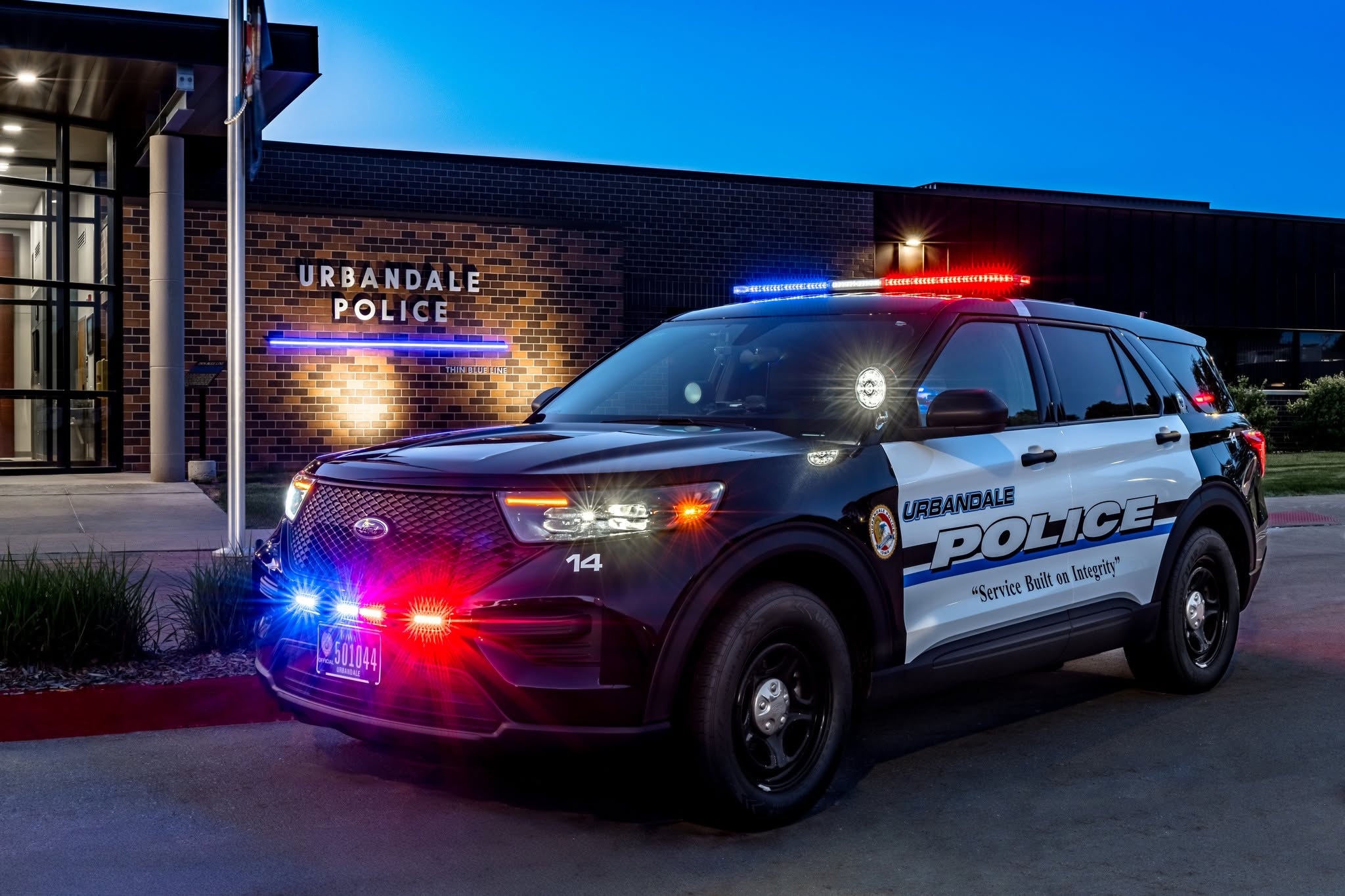
Top photo was first published on the Facebook page of the Urbandale Police Department.
3 Comments
thanks for covering this
disturbing (but not surprising) that both the police and the judge kept this info from the public. We really need civilian oversight of policing in this state, especially as we are losing local press coverage.
dirkiniowacity Tue 10 Nov 11:50 AM
Does the Urbandale Police Department...
…realize that this story smells bad? Do they care?
More importantly, do the citizens of Urbandale care? Or does the Urbandale Police Department have reason to believe that the department need not be concerned about public reaction?
Also troubling…would it have made a difference if the two victims who were killed/injured had been prominent Central Iowa residents, people with considerable money, status, name recognition, or all three?
And it doesn’t help to have a friend who was injured when another driver decided that playing with her phone was more important than paying attention to her driving, so she ended up crashing into my friend’s car as it was waiting in a turn lane. I will be following this Urbandale case.
PrairieFan Tue 10 Nov 3:12 PM
No title
Without knowing any of the details of who did what after the accident and the legal charges that result two things that she will have to deal with as a person and as a judge are accepting her responsibility in the death of one person and injury of the other. Given everything all of us know about this, fiddling with your phone and causing the death and injury would seem hard to personally resolve.
In her role as a district court judge I wonder how what happened here will affect her judgment when cases like this come to her docket and she has to facilitate or make a decision on guilt and degree of consequences. She may also have to determine how any of the defendants in her court were treated by the police and be able to answer to the victim and the families of the victim(s) whether or not a fair decision is the result of the proceedings in her courtroom.
There is a need for more information.
Whatever the explanation is provided by the Urbandale PD, whatever the charges and punishment are that she may experience, the harder part for Judge Poschner may be continuing to serve with credibility as a district court judge.
WKWEBER44 Sun 15 Nov 8:29 AM